
Īpašs piedāvājums
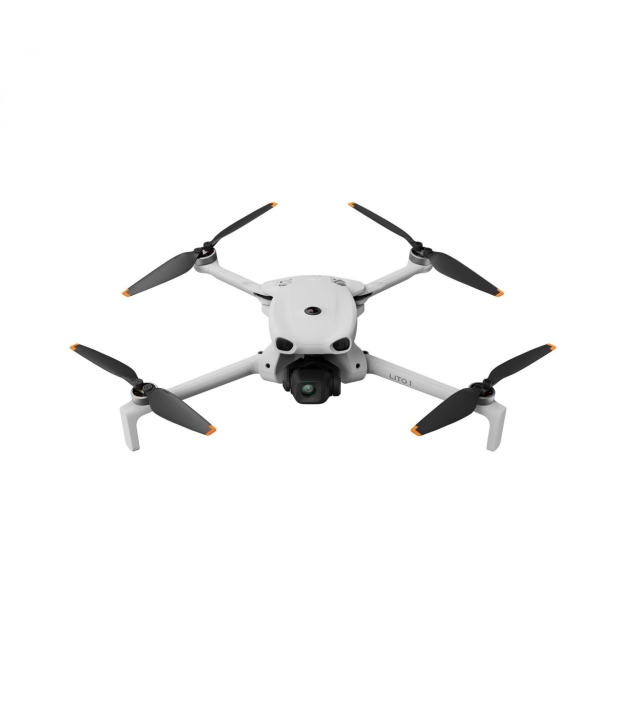
Drone, DJI, Lito 1, CP.MA.00000990
MPN:
CP.MA.00000990
Zīmols:
DJI
399,87 €
/ ar PVN
330,47 €
/ bez PVN
/ ar PVN
/ bez PVN
2 Darba dienas
30 noliktavā
Apraksts
Atgriešanas noteikumi
Garantija
Piegādes informācija
Jautājumi?
Ekspertu palīdzība tikai viena klikšķa attālumā.
Kontakti
Produkta Apraksts
The omnidirectional vision system only assists flight safety under certain conditions and is not a substitute for your own judgment and control. During a flight, always pay attention to the surrounding environment and the warnings on the DJI Fly app, and be responsible for and maintain control of the drone at all times. When GNSS signals are unavailable, the optimal positioning altitude range for using the vision positioning system is 0.5 to 30 m. The vision positioning performance may decrease when flying beyond this range. Fly with caution. The vision system may not function properly when the drone is flying over water, which may prevent it from actively avoiding water surfaces below when landing. Operators should maintain control of the drone at all times, make operational decisions based on an assessment of the surrounding environment, and avoid relying solely on the vision system. The vision system cannot detect certain objects or surfaces, including large structures with frames and cables (e.g., tower cranes, high-voltage transmission towers, high-voltage transmission lines, cable-stayed bridges); surfaces with no texture or sparse texture; surfaces with repetitive identical patterns or textures (e.g., small tiles of the same color); solid-colored surfaces (e.g., pure black, pure white, pure red, pure green); strongly reflective or mirrored surfaces (e.g., ice, road signs); water or transparent surfaces; surfaces of moving objects (e.g., above moving crowds, above waving shrubs or grass); moving obstacles (e.g., walking people, moving vehicles); scenes with drastic lighting changes; surfaces that are extremely dark (e.g., less than 1 lux) or extremely bright (e.g., more than 100,000 lux); materials with strong infrared absorption or reflection properties (e.g., mirrors, glass, road signs, asphalt); small obstacles (e.g., fences, branches, power lines); and thin poles or small vertical objects (e.g., utility poles, street lamps). Do not obstruct or interfere with the sensing system under any circumstances. Ensure that all lenses remain clear, free from dirt, smudges, or other contaminants, and are not scratched. Vision system cameras may need to be calibrated after being stored for an extended period. A prompt will appear in the DJI Fly app and calibration will be performed automatically. Do not fly when it is rainy, smoggy, or the visibility is lower than 100 m. Before takeoff, inspect the sensing system's glass surfaces. Remove any protective film, stickers, or other obstructions. If water droplets, fingerprints, or smudges are present, clean the glass using a lint-free cloth. Do not use alcohol or other organic solvents. If the glass surface is loose, broken, scratched, or worn, send the drone to an authorized service center for repair. Refer to the product's user manual for more details.
The omnidirectional vision system only assists flight safety under certain conditions and is not a substitute for your own judgment and control. During a flight, always pay attention to the surrounding environment and the warnings on the DJI Fly app, and be responsible for and maintain control of the drone at all times. When GNSS signals are unavailable, the optimal positioning altitude range for using the vision positioning system is 0.5 to 30 m. The vision positioning performance may decrease when flying beyond this range. Fly with caution. The vision system may not function properly when the drone is flying over water, which may prevent it from actively avoiding water surfaces below when landing. Operators should maintain control of the drone at all times, make operational decisions based on an assessment of the surrounding environment, and avoid relying solely on the vision system. The vision system cannot detect certain objects or surfaces, including large structures with frames and cables (e.g., tower cranes, high-voltage transmission towers, high-voltage transmission lines, cable-stayed bridges); surfaces with no texture or sparse texture; surfaces with repetitive identical patterns or textures (e.g., small tiles of the same color); solid-colored surfaces (e.g., pure black, pure white, pure red, pure green); strongly reflective or mirrored surfaces (e.g., ice, road signs); water or transparent surfaces; surfaces of moving objects (e.g., above moving crowds, above waving shrubs or grass); moving obstacles (e.g., walking people, moving vehicles); scenes with drastic lighting changes; surfaces that are extremely dark (e.g., less than 1 lux) or extremely bright (e.g., more than 100,000 lux); materials with strong infrared absorption or reflection properties (e.g., mirrors, glass, road signs, asphalt); small obstacles (e.g., fences, branches, power lines); and thin poles or small vertical objects (e.g., utility poles, street lamps). Do not obstruct or interfere with the sensing system under any circumstances. Ensure that all lenses remain clear, free from dirt, smudges, or other contaminants, and are not scratched. Vision system cameras may need to be calibrated after being stored for an extended period. A prompt will appear in the DJI Fly app and calibration will be performed automatically. Do not fly when it is rainy, smoggy, or the visibility is lower than 100 m. Before takeoff, inspect the sensing system's glass surfaces. Remove any protective film, stickers, or other obstructions. If water droplets, fingerprints, or smudges are present, clean the glass using a lint-free cloth. Do not use alcohol or other organic solvents. If the glass surface is loose, broken, scratched, or worn, send the drone to an authorized service center for repair. Refer to the product's user manual for more details.
2. ActiveTrack can work properly only when certain flight conditions are met. See Footnote 1 to ensure the omnidirectional vision system is normal and avoid flying in the following environments or conditions: DO NOT fly in severe weather conditions, such as in strong winds (wind speed of more than 10.7 m/s), snow, rain, lightning, or fog. DO NOT fly the drone 4500 m or higher above sea level. DO NOT fly the drone in environments where the temperature is below 0° C (32° F) or above 40° C (104° F). DO NOT take off from moving objects, such as cars or boats. DO NOT fly close to reflective surfaces such as water or snow. Otherwise, the vision system may not work correctly. The vision system may not work properly in dim environments. Always fly with caution and prevent the drone from entering Attitude mode. DO NOT fly near areas with magnetic or radio interference. Common magnetic or radio interference sources include Wi-Fi hotspots, routers, Bluetooth devices, high-voltage lines, large-scale power transmission stations, radar stations, mobile base stations, and broadcasting towers. Avoid sand entering the drone when taking off in desert or beach areas. Fly the drone in open areas away from crowds. Buildings, mountains, and trees may block the GNSS signal and affect the onboard compass.
Standard video recording supports up to 4K/60fps, and slow-motion video recording supports up to 4K/100fps.
Photo resolution can reach up to 8K (48 MP). When the resolution is 8K (48 MP), SmartPhoto is unavailable. When the resolution is 4K (12 MP), SmartPhoto can be automatically enabled to apply algorithmic beautification.
The actual product weight may vary due to differences in batch materials and external factors. Training or examination is not required for flying this product in most countries and regions. With the Intelligent Flight Battery Plus, the aircraft will weigh more than 249 g. Always check local laws and regulations before use.
Using the Intelligent Flight Battery, the maximum flight time is 36 minutes. This is measured in a controlled wind tunnel environment under conditions equivalent to windless operation and sea-level altitude, with the drone flying forward at a constant speed of 21.6 kph, Obstacle Avoidance Action set to Brake and in photo mode, until forced landing due to battery depletion. The Intelligent Flight Battery Plus extends the flight time to 52 minutes when flying forward at a constant speed of 21.6 kph. However, the Intelligent Flight Battery Plus is not included in the combo. If needed, purchase it separately. Please note that the Intelligent Flight Battery Plus is not supported by this product in the EU or the UK. Always comply with local laws and regulations before flying.
Measured in an open outdoor environment without interference and with IC compliance. The above data shows the farthest communication range for one-way, non-return flights. Always pay attention to RTH reminders in the DJI Fly app during your flight.
Specifikācijas
Attēli
Atbalstītie attēlu formāti
JPEG/Raw
Vispārīgi
Modeļa nosaukums
Lito 1
Viegli lietojams
Jā
Stabilizatora aizsargs
Jā
Zemākais latentums
120 ms
Maksimālais kāpšanas ātrums
7 m/s
Maksimālais nolaišanās ātrums
7 m/s
Maksimālais lidojuma augstums
4500 m
Maksimālais lidojuma laiks
36 min
Maksimālais darbības attālums
20000 m
Maksimālais piķēšanas leņķiskais ātrums
35 °/sec
Maksimālā vēja izturība
10.7 m/s
Mehāniskais panoramēšanas diapazons
-30 - 30 °
Mehāniskais ripošanas diapazons
-49 - 49 °
Propellera lāpstiņu skaits
2
Rotoru skaits
4 rotors
Veids
Quadcopter
Krātuve
Saderīgo karšu veidi
MicroSDXC
Maks. atmiņas karte
1000 GB
Atmiņas kartes slots
Jā
Attēlot
Bitrate At Maximum Video Resolution
130 Mbit/s
Field Of View Fov Angle
79 °
Maks. video izšķirtspēja
3840 x 2160 pixels
Megapikseļi
48 MP
Video izšķirtspējas
1920 x 1080/3840 x 2160 pixels
Savienojumi
Bluetooth
Jā
Bluetooth versija
Bluetooth versija kontrolē darbības attālumu, caurlaides ātrumu un atbalstītos audio kodekus. 5.0+ dubulto darbības attālumu un joslas platumu salīdzinājumā ar 4.x; 5.3 pievieno LE Audio ar augstākas kvalitātes LC3 kodeku. Abām ierīcēm jāatbalsta tā pati
5.4
GPS
Jā
Wi-Fi
Wi-Fi paaudze nosaka maksimālo ātrumu un to, cik labi ierīce sadzīvo ar kaimiņiem. Wi-Fi 6 (802.11ax) ir mūsdienu pamatlīmenis; Wi-Fi 6E pievieno tīrāko 6 GHz joslu; Wi-Fi 7 (Be) ievieš multi-link darbību un vēl augstākus pīķus. Maršrutētājam un klientam
802.11a/802.11b/802.11g/Wi-Fi 4 (802.11n)/Wi-Fi 5 (802.11ac)/Wi-Fi 6 (802.11ax)
Wi-Fi
Jā
Akumulators un drošība
Akumulatora kapacitāte
Akumulatora ietilpība (Wh vai mAh) ir kopējā enerģija, ko akumulators uzkrāj. Ierīču salīdzināšanai jēgpilna ir Wh vērtība (mAh prasa zināt arī spriegumu). Lielāka ietilpība pievieno svaru un izmēru; vidējās klases klēpjdatori atrodas pie 50-70 Wh.
18.96 Wh
Baterijas barots
Jā
Akumulatora tehnoloģija
Li-Ion: standarts. Li-Po: plānāks, vieglāks. LiFePO4: ilgāks ciklu kalpošanas laiks.
Lithium-Ion (Li-Ion)
Akumulatora spriegums
7.32 V
Saderība
Video formāti
AVC/H.264/HEVC/H.265/MP4/MPEG4
Funkcijas
Maksimālais vadības ātrums
100 °/sec
Kustību vadības funkcijas
Backward/Downward/Forward/Lateral/Upward
Pults iekļauta
Jā
Skrūvgriezis komplektā
Jā
Sensora tips
CMOS: lielākā daļa kameru mūsdienās. CCD: vecāks, augstāka kvalitāte. BSI: labāka nakts uzņemšana.
CMOS
Fiziskie parametri
Dziļums
183 mm
Svars
0.249000
Augstums
79 mm
Platums
251 mm
Salokāms
Jā
Mehāniskais slīpuma diapazons
-126 - 67 °
Sensora izmērs
Lielāks sensors = labāka mazas gaismas veiktspēja.
1/2
Krāsa
Pelēks
Papildus
Garantija
24L
SKU
1458712
EAN
6937224146877
Kamera
Maks. kadru ātrums
60 fps
Iebūvēta tīmekļa kamera
Jā
Slēģa ātrums
Ekspozīcijas laika diapazons. Ātrāks slēdzis samazina kustību miglojumu.
1/8000-2 s
Maks. apertūra (f-skaitlis)
Zemāks f-skaitlis = platāka apertūra = labāka darbība mazā gaismā.
1.8
Tīkls
Antenu skaits
2