
Special offer
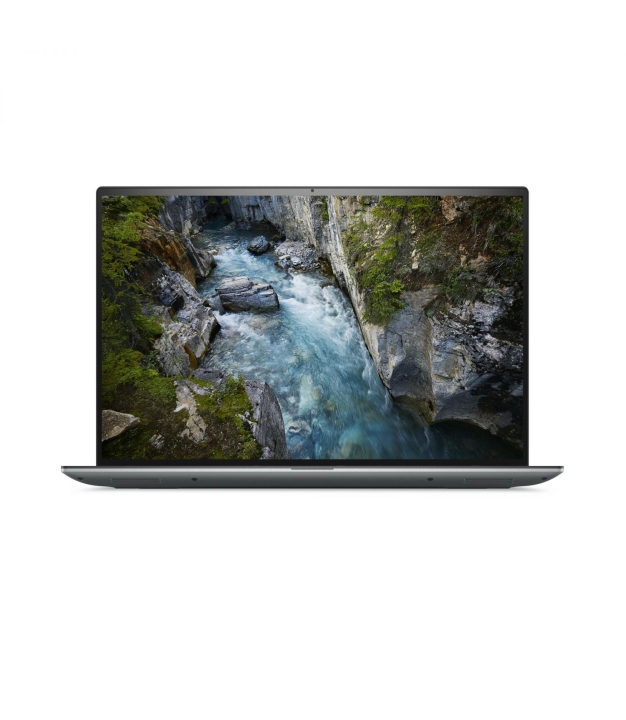
Notebook, DELL, Precision, 5490, CPU Core Ultra, u7-155H, 3800 MHz, CPU features vPro, 14, 1920x1200, RAM 16GB, LPDDR5x, 7467 MHz, SSD 1TB, Nvidia RTX 1000 Ada, 6GB, NOR, Windows 11 Pro, 1.49 kg, N001P5490EMEA_VP_NORD
MPN:
N001P5490EMEA_VP_NORD
Brand:
Dell
Screen Size:
35.6 cm (14")
Processor Family:
Intel Core Ultra 7
RAM:
16 GB
€2,759.45
/ incl. VAT
€2,280.54
/ excl. VAT
/ incl. VAT
/ excl. VAT
In 2 Business Days
5 in Stock
Short description
Return Policy
Warranty
Delivery Information
Have questions?
Expert help just one click away
Contact Us
Product Description
Take your ideas to the next level with *the world’s #1 workstations; optimized for performance, reliability and user experience.
- Windows 11 Pro 64-bit
- Intel Core Ultra 7 155H (24MB Cache)
- 35.6 cm (14) Full HD+ 1920 x 1200 WVA, NVIDIA RTX 1000 Ada (6GB GDDR6)
- 16GB (7467MHz) LPDDR5x-SDRAM & 1000GB SSD
Actual configuration might differ from illustration
Product Carbon Footprint (PCF)
1. Dell calculates the Product Carbon Footprint using one of two methodologies, depending on the product: the Dell PCF calculator (GaBi version XXX, YYYY) or the Product Attribute to Impact Algorithm (PAIA, X.X.X, YYYY). The methodology used is indicated in the Version of PCF tool used column.
2. PAIA (Product Attribute Impact Algorithm) is a streamlined LCA tool developed by MIT ‘s Materials System Laboratory. PAIA estimates the product’s carbon footprint using limited system attributes of the product such as component dimension, screen size, system weight, and annual energy consumption.
3. Please note the emission estimate in this report is calculated using the mean value along with the standard deviation for that product model.
4. Use of default inputs (i.e. not primary data) and assumptions on location of use and other fields can introduce a standard deviation which must be taken into account while completing the calculations. For more information refer to the PCF pages on Dell.com.
5. For the PAIA PCF methodology, the transportation from assembly to customer includes the emissions generated during air, ocean and land transportation of finished or semi-finished Dell products between Dell facilities and between Dell facilities to customers.
6. For the Dell PCF calculator and methodology, the transportation phase the default delivery assumptions are 90% of transport happening by sea and 10% happening by air. Trucking distances don’t contribute as much to the PCF impact compared to more influential by sea or by air distances modes.
7. Please note, PAIA uses the ecoinvent Database (https://ecoinvent.org/the-ecoinvent-database/) whenever primary data is not made available for calculations.
8. For client and commercial end user computing products, minimum configurations were assumed for calculations. For Server and Storage products, typical configurations or ENERGY STAR (https://www.energystar.gov/products) configurations were used for calculations.
9. Use Phase emissions were calculated based on the location of use as Europe i.e. the Use Phase emissions are not specific to a single country / location.The Dell PCF Calculator also estimates Use Phase emissions for the U.S. and China, which are available in the PCF PDF documents on Dell.com.
10. The report provides the total emissions separated by the 4 lifecycle phases: manufacturing, transport, use, and end of life to understand the impact of each phase.
11. The Dell PCF Calculator lifetime usage assumption at the product family level is as follows: Desktop, Notebook - 5 years, Display - 6 years and Servers/Storage - 4 years.
12. For Displays, total product weight refers to the weight of the typical product configuration, including any cables and the power cord.
* Blanks indicate we do not have the corresponding metric calculated or data is currently unavailable for the specific product at this time.
Specifications
General
Model Name
5490
Accelerometer
Yes
Ai Datatype Support On Npu
FP16/FP32/Int8
Carbon Emissions Energy Usage
20.24
Market Segment
Business
Maximum Frequency Npu
1.4 GHz
Memory Transfer Rate
7467 MT/s
Nb Family Name
Precision
Operating Altitude
-15.2 - 3048 m
Operating Humidity
10 - 90 %
Paia Version
GaBi version 1, 2024
AI Sparsity Support
Hardware support for sparse neural network operations, which can roughly double AI inference throughput on supported models.
Yes
Sustainability Certs
ENERGY STAR/TCO
Video Capture Speed
30 fps
Processor
Boost Clock Speed
Boost clock speed (GHz) is the peak frequency a few cores can reach for short bursts when thermal and power headroom allow. Higher boost clock makes interactive apps feel snappier and accelerates short, bursty workloads like web browsing and Office.
4.8 GHz
Processor Cores
Cores are the independent processing units inside the CPU. More cores let the system handle more applications and threads simultaneously without slowdown. 4 cores is fine for office work, 6-8 for content creation and gaming, 12+ for video editing, simulat
16
Processor Model
155H
CPU Generation
Newer generation = better performance per watt and more features.
Intel® Core™ Ultra (Series 1)
CPU Brand
Intel
Processor Threads
Threads are the virtual processing lanes the CPU exposes to the operating system. Hyper-Threading / SMT typically doubles thread count vs core count, which improves throughput on parallel workloads like rendering and compilation. Threads do not double sin
22
Efficiency Cores
Efficiency cores (E-cores) are smaller, lower-power CPU cores that handle background tasks (telemetry, sync, web tabs) while the P-cores stay free for the active app. They boost multi-threaded throughput cheaply and extend battery life on notebooks.
8
Neural Processor (NPU)
Dedicated AI accelerator built into the CPU package. Used by Windows Studio Effects, Copilot+ features and AI inference workloads.
Intel AI Boost
Performance Cores
Performance cores (P-cores) are the high-power CPU cores used for demanding foreground tasks - games, rendering, single-threaded productivity. They run at the highest clock speeds and consume the most power. P-core count is the main driver of peak single-
6
E-core Base Frequency
0.9 GHz
E-core Max Turbo
3.8 GHz
Intel Thunderbolt 4
Thunderbolt 4 is a 40 Gb/s USB-C standard that combines high-speed data, dual 4K (or single 8K) display output and 100 W power delivery in one cable. It is required for daisy-chained eGPUs and the fastest external NVMe enclosures.
Yes
Low Power Efficient Core Base Frequency
700 MHz
Low-Power E-core Max Turbo
2.5 GHz
Low-Power E-cores
2
Memory Speed
Memory speed (MT/s or MHz) is how many transfers per second the RAM can do. Higher memory speed reduces the wait for data and noticeably boosts performance on Ryzen CPUs and integrated graphics. DDR5-5600 is the current entry; DDR5-6400+ benefits enthusia
7467 MHz
P-core Base Frequency
1.4 GHz
P-core Max Turbo
4.8 GHz
Base Power
Base Power (W, also called PL1) is the sustained power the CPU is rated to draw at base clock. It maps directly to long-term cooling requirements: a 65 W chip fits stock coolers, a 125 W chip needs a tower or AIO cooler.
28 W
Cache Memory
Cache memory is the tiny but extremely fast on-chip memory the CPU uses to keep frequently accessed data close to the cores. Larger L2 and L3 caches cut down on slow trips to system RAM, which is especially valuable for gaming, databases and compilation.
24 MB
Cache Type
Smart Cache
Print
Carbon Footprint
115
Memory
Max Supported RAM
16 GB
RAM Form Factor
SODIMM: notebook. DIMM: desktop. LPDDR: soldered, power-efficient.
On-board
Memory Type
Memory type sets the RAM generation. DDR5 is the current standard for Intel 12th-gen+ and AMD AM5; it delivers higher bandwidth and lower voltage than DDR4. DDR4 is still common on older platforms. Memory type must match the motherboard; the slots are phy
LPDDR5x-SDRAM
Memory Channels
Dual-channel (2) doubles bandwidth vs single-channel; quad-channel for servers.
Dual-channel
Storage
SSDs Installed
1
NVMe
NVMe SSDs are 5–10× faster than SATA. Standard in modern notebooks.
Yes
SSD Storage
SSD storage (GB or TB) is the usable space on the solid-state drive. The operating system plus a few games and apps already consumes 200-400 GB. 1 TB is comfortable for general use, 2 TB+ for large game libraries or content creation.
1 TB
Storage Type
SSD
SSD Capacity
1000 GB
Total Storage
1 TB
Compatible Card Types
MicroSD (TransFlash), MicroSDHC, MicroSDXC
Optical Drive
No
SSD Interface
PCI Express 4.0
Display
Contrast Ratio
Static contrast ratio measures how much brighter pure white is than pure black on the panel. Higher contrast means deeper blacks and more punch. Typical IPS panels reach 1000:1, VA panels 3000:1, OLED panels effectively infinite contrast.
1000:1
Resolution
Native resolution is the pixel grid the panel was designed to display. FHD = 1920x1080, QHD = 2560x1440, 4K UHD = 3840x2160, 5K = 5120x2880. Running below native resolution makes the image fuzzy unless content is scaled cleanly (which only works for some
1920 x 1200 pixels
Refresh Rate
Refresh rate (Hz) is how many times per second the screen redraws its image. 60 Hz is the standard for productivity; 120-144 Hz feels noticeably smoother for everyday use; 240+ Hz benefits competitive gaming. Higher refresh rate also reduces motion blur.
60 Hz
Panel Type
Panel type sets the colour, contrast and viewing-angle character of the monitor. IPS = wide viewing angles, accurate colour, moderate contrast; VA = high contrast and deep blacks, narrower angles; TN = fastest response but limited angles; OLED = perfect b
WVA
Resolution Class
FHD=1920×1080, QHD=2560×1440, 4K=3840×2160, OLED refers to panel type.
Full HD+
Brightness
Peak brightness in nits (cd/m²). 300+ nits for indoor; 500+ for outdoor use.
500 cd/m²
Backlight
Edge-lit: thinner, less uniform. Direct-lit/Full-array: brighter, local dimming.
Yes
Pixel Density
PPI (pixels per inch). Higher = sharper image. 220+ PPI is Retina-quality.
161 ppi
Colour Space Coverage
sRGB
Touchscreen
No
Anti-Glare
Matte coating reduces reflections in bright environments; glossy = more vivid colours.
Yes
Colour Gamut
Percentage of a colour space the display can reproduce. Higher = more vivid colours.
100 %
Aspect Ratio
16:9 = standard widescreen. 16:10 = more vertical space. 21:9 = ultrawide.
16:10
Graphics
iGPU Brand
Intel
Integrated Graphics
Built-in GPU for display output. Not suitable for gaming or 3D workloads.
Yes
iGPU Family
Intel Arc Graphics
Integrated GPU Model
Intel Arc Graphics
Dedicated GPU
Separate graphics chip (e.g. NVIDIA RTX, AMD Radeon). Required for gaming, 3D and video editing.
Yes
Discrete GPU
NVIDIA RTX 1000 Ada
VRAM
VRAM is the dedicated video memory installed on the graphics card. Games and 3D apps load textures, shaders and frame buffers into VRAM; running out forces slower system RAM swapping and causes stutter. 8 GB is the comfortable minimum for 1080p gaming, 12
6 GB
Discrete GPU Memory Type
VRAM technology on the discrete GPU (GDDR6, GDDR6X, GDDR7).
GDDR6
Connectivity
Wi-Fi
Wi-Fi generation sets peak speed and how well the device coexists with neighbours. Wi-Fi 6 (802.11ax) is the modern baseline; Wi-Fi 6E adds the cleaner 6 GHz band; Wi-Fi 7 (Be) brings multi-link operation and even higher peaks. The router and the client m
802.11a/802.11b/802.11g/Wi-Fi 4 (802.11n)/Wi-Fi 5 (802.11ac)/Wi-Fi 6E (802.11ax)/Wi-Fi 7 (802.11be)
Bluetooth
Yes
Wi-Fi Standard
Wi-Fi 7 (802.11be) is fastest; Wi-Fi 6/6E: very fast; Wi-Fi 5: standard.
Wi-Fi 7 (802.11be)
Card Reader
Yes
Mobile Network Support
No
USB-C DisplayPort Alt-Mode
Yes
Cable Lock Slot
Yes
Cable Lock Slot Type
Wedge
Thunderbolt 4 Ports
4
Wi-Fi Controller Manufacturer
Intel
WLAN Chip
Intel Wi-Fi 7 BE200
Keyboard & Input
Keyboard Backlight
Yes
Numeric Keypad
No
Pointing Device
Touchpad, TrackPoint, or other built-in pointing mechanism.
Touchpad
Battery & Security
Recharge Time
4 h
Battery Voltage
15.4 V
Battery Capacity
Battery capacity (Wh or mAh) is the total energy the battery stores. For comparing devices the Wh value is the meaningful one (mAh requires knowing the voltage too). Bigger capacity adds weight and bulk; mid-range notebooks land at 50-70 Wh.
72 Wh
Fingerprint Reader
Yes
USB-C Charging
Yes
Battery Cells
4
Password Protection
Yes
Trusted Platform Module Tpm
Yes
Trusted Platform Module Tpm Version
2.0
Operating System
Operating System
Windows 11 Pro
Operating System Architecture
64-bit
Windows Studio Effects
Support for Windows Studio Effects (background blur, eye contact, voice focus) accelerated by the NPU.
Yes
Networking
Antenna Type
2x2
Audio
Built-in Microphone
Yes
Combo Headphone / Mic Port
Yes
Built-in Speakers
4
Speaker Power
2 W
Power
Fast Charging
Yes
Ac Adapter Frequency
50 - 60 Hz
Ac Adapter Input Voltage
100 - 240 V
AC Adapter Power
130 W
USB Power Delivery
Allows charging via USB-C. PD wattage determines charging speed.
Yes
Max Turbo Power
Max Turbo Power (W, also called PL2) is the peak short-burst power draw when the CPU is hitting boost frequencies. It can be 1.5-3x the base power. Adequate VRM cooling on the motherboard and a quality PSU are essential to sustain it.
115 W
Software
AI Frameworks (NPU)
AI software frameworks supported by the on-chip Neural Processing Unit (e.g. DirectML, ONNX RT, OpenVINO).
DirectML/ONNX RT/OpenVINO/Windows ML
Camera
Front Camera
Yes
Front Camera Resolution
1280 x 720 pixels;0.92 MP
Front Camera Resolution Class
HD
Infrared Ir Camera
Yes
Features
Ambient Light Sensor
Yes
Hall Sensor
Yes
Physical
Weight
1.490000
Form Factor
Clamshell
Colour
Grey
Depth
210.35 mm
Width
310.6 mm
Height Front
7.49 mm
Height Rear
18.95 mm
SSD Form Factor
M.2
Additional
Warranty
36
SKU
1433043
EAN
143304300000
CN Code
84713000